CALIFORNIAWATER MONITORING PROJECT
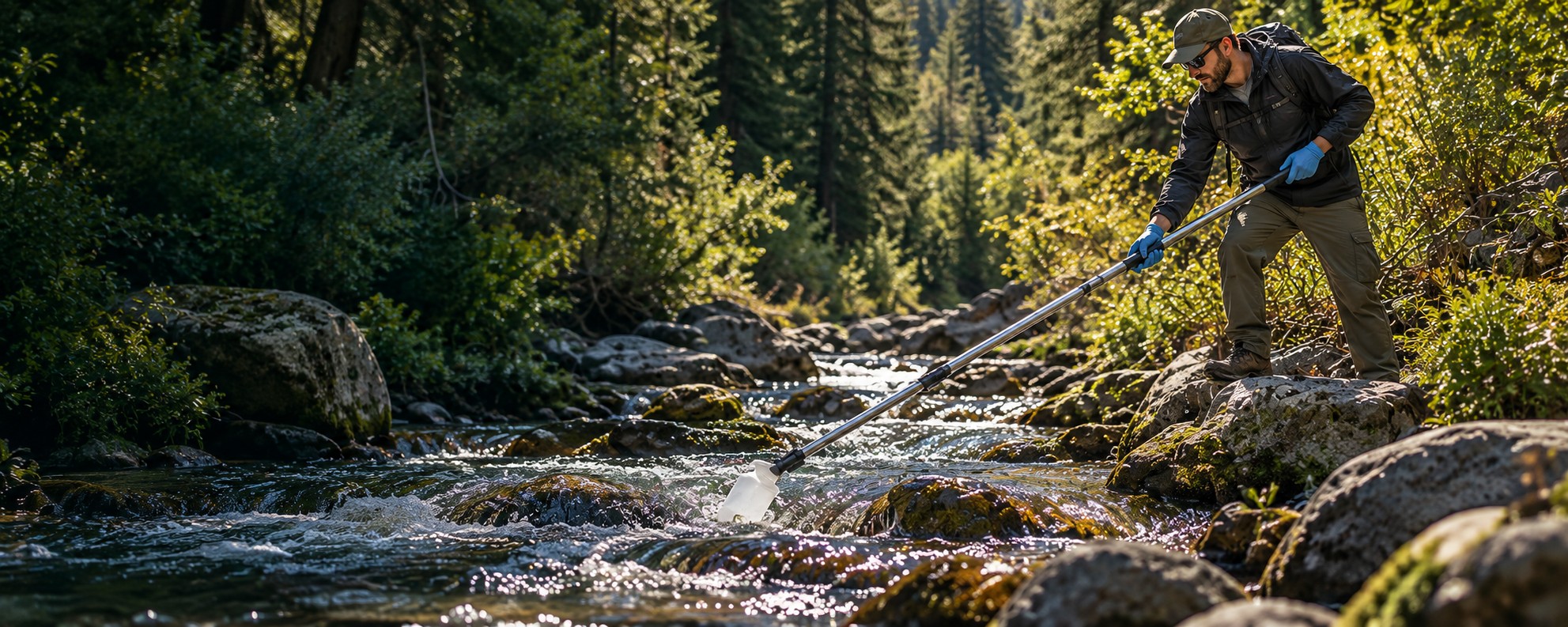
Illustration of a man collecting creek water with a pole-mounted sample cup

Follow the chemical. Test the water. Publish the evidence.

A Safer,
Healthier California

We use county pesticide-use reports to identify treated forestry sites, then test the runoff below them. Missing reports do not stop the monitoring: we investigate suspected later helicopter applications and test for those chemicals too.

County PURsIdentify what was sprayed
Fall runoffSample when the rains begin
Spring snowmeltReturn when runoff flows
Agency follow-upSubmit and track the evidence

The first program

Start local.
Build a repeatable process.

California Water Monitoring Project is being formed as an independent nonprofit to track herbicides leaving treated forestry land and entering water.

The first program concentrates on Lassen and Plumas counties. Reported spring backpack treatments help identify sites. We also investigate suspected autumn helicopter applications and test for those chemicals even when the later pesticide-use report is missing.

Sampling follows actual rain and snowmelt, not a guaranteed calendar date. The number of sites and samples depends on laboratory funding, access and volunteers.

Initial focus · Lassen + Plumas

The plan

Five steps.
One evidence chain.

Prove the process in Lassen and Plumas, then expand as funding and local volunteers become available.

1

Get the PURs. Write the plan.

Obtain pesticide-use reports, compare treatments across the season and investigate missing autumn reports. Use the reports and other application evidence to plan collection points, access routes, water and sediment samples, and tests for documented and suspected chemicals.

2

Test fall runoff

When fall rain produces runoff, follow the written plan to collect water and selected creek-bed sediment below treated areas. Order the tests identified by the reports, other application evidence and suspected reporting gaps.

3

Test spring snowmelt

Prepare the spring sampling plan and return during snowmelt to collect runoff and selected creek-bed sediment where access and flowing water permit.

4

Publish and follow up

Publish application records, laboratory reports and sample locations, including detections and non-detections. When findings warrant complaints, guide regulators to the sites and publish their investigation findings, decisions and responses.

5

Expand when ready

Use Lassen and Plumas as the model. As funding and volunteers grow, train and assist residents in other California counties to carry out the same monitoring process.

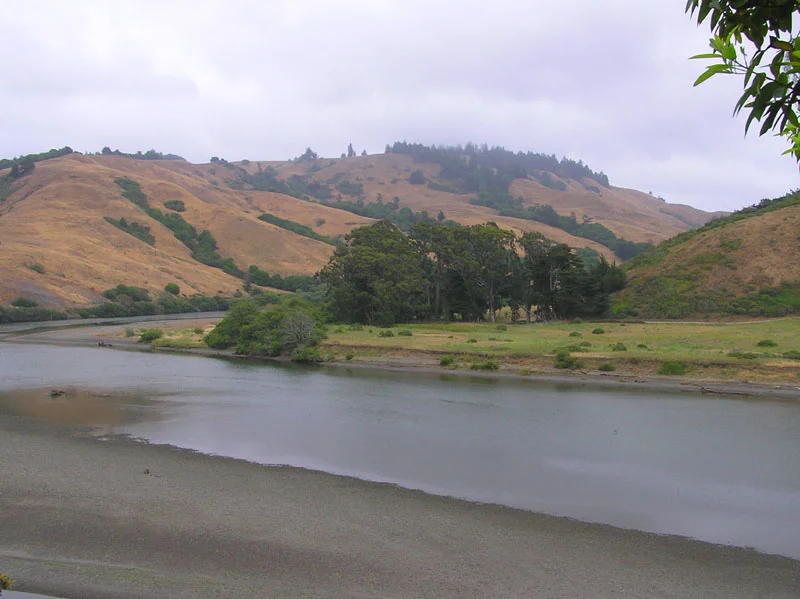
Wfm russian river

How the first season works

Sample the water
when it is actually moving.

Before fall rain, volunteers use spring and summer PURs to identify sites, check for later helicopter applications and missing reports, and arrange access to runoff collection points. A qualified laboratory determines bottles, handling and delivery requirements for the documented and suspected chemicals being tested.

Before the rain: organize PURs, target chemicals, sites, access and laboratory requirements.
Fall storms: collect runoff at selected treated sites and send samples for testing.
Spring melt: return to the same treatment areas where runoff is present.
Every sample: record location, date, time, field observations and transfer to the laboratory.

When off-site herbicides are documented

Put the evidence
in front of the agencies.

Finding a chemical in runoff is not the end of the work. CWMP will submit the evidence and follow the response.

1 · Package the record

Relevant PUR, sample location and date, laboratory report and supporting field records.

2 · File complaints

Submit to the regional Water Board, California DPR and the county agricultural department.

3 · Request investigation

Ask the agencies to investigate the source and respond to the evidence.

4 · Publish the response

Track the agency response and follow up on unanswered questions.

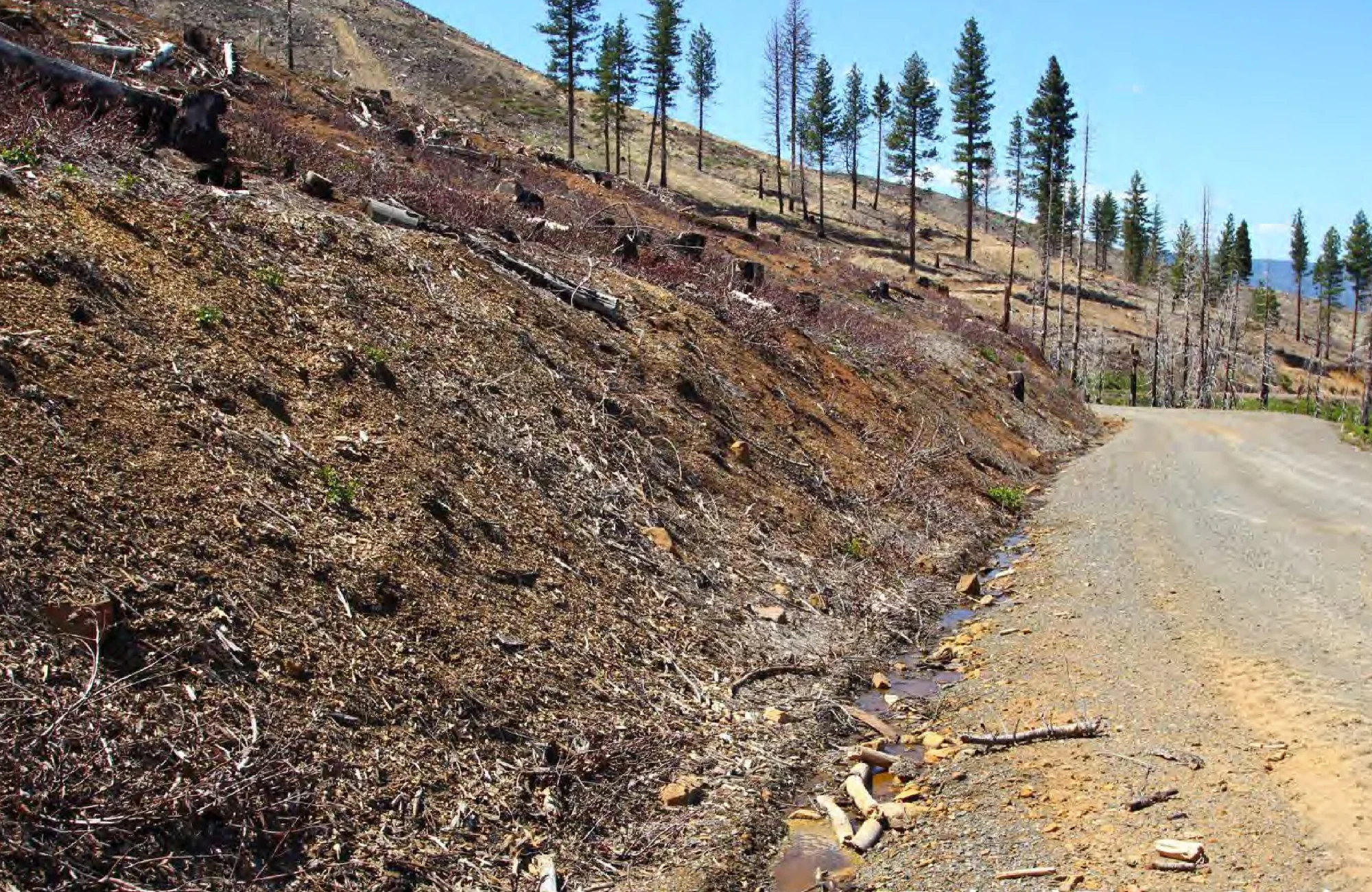
Runoff in a U.S. Forest Service road gutter below steep, post-fire forestry land near Gold Run Road in Lassen County, California.

From application records to water samples

Testing runoff below treated forestry sites.

California monitoring has already found forestry herbicides in water. The EMC-2021-001 and EMC-2022-001 proposals laid out a way to connect water samples with documented pesticide applications, but those studies were not completed through the EMC.

Independent field testingDo forestry-herbicide safeguards keep these chemicals out of the water?

CWMP will test how the safeguards administered by DPR, the Water Boards, the Board of Forestry and CAL FIRE work in the field. We believe the current system is not doing enough. We will use pesticide-use reports and other application records to identify treated sites and guide laboratory testing. Where reported spring backpack treatments are followed by suspected autumn helicopter spraying with no use report, we will investigate the gap and test for the suspected autumn chemicals—including hexazinone, indaziflam and 2,4-D. A missing report will not exclude a site from monitoring.

We will publish every result—including non-detections—with the laboratory’s reporting limits. Each result describes one sample. Identifying a chemical’s source or determining whether a rule was violated requires further investigation.

Read the research behind our work

About the photograph above · Diamond Mountains · Lassen County, California

Runoff below Motor Sheep’s 470-acre herbicide application

The photograph above shows runoff descending steep, post-fire terrain from RRF Lassen-Plumas LLC property onto a U.S. Forest Service road near Gold Run Road, outside Susanville. The road gutter carries the flow downhill, collecting more runoff along the way, before a culvert sends it farther down the mountain. The pattern of dead vegetation suggests herbicide spraying extended right up to the road gutter, with no vegetated buffer visible between the sprayed slope and the drainage channel. Runoff like that shown here and streams directly below forestry herbicide projects are CWMP’s primary sampling targets. On future similar projects, we will sample these waters and test for the herbicides documented or suspected at each site.

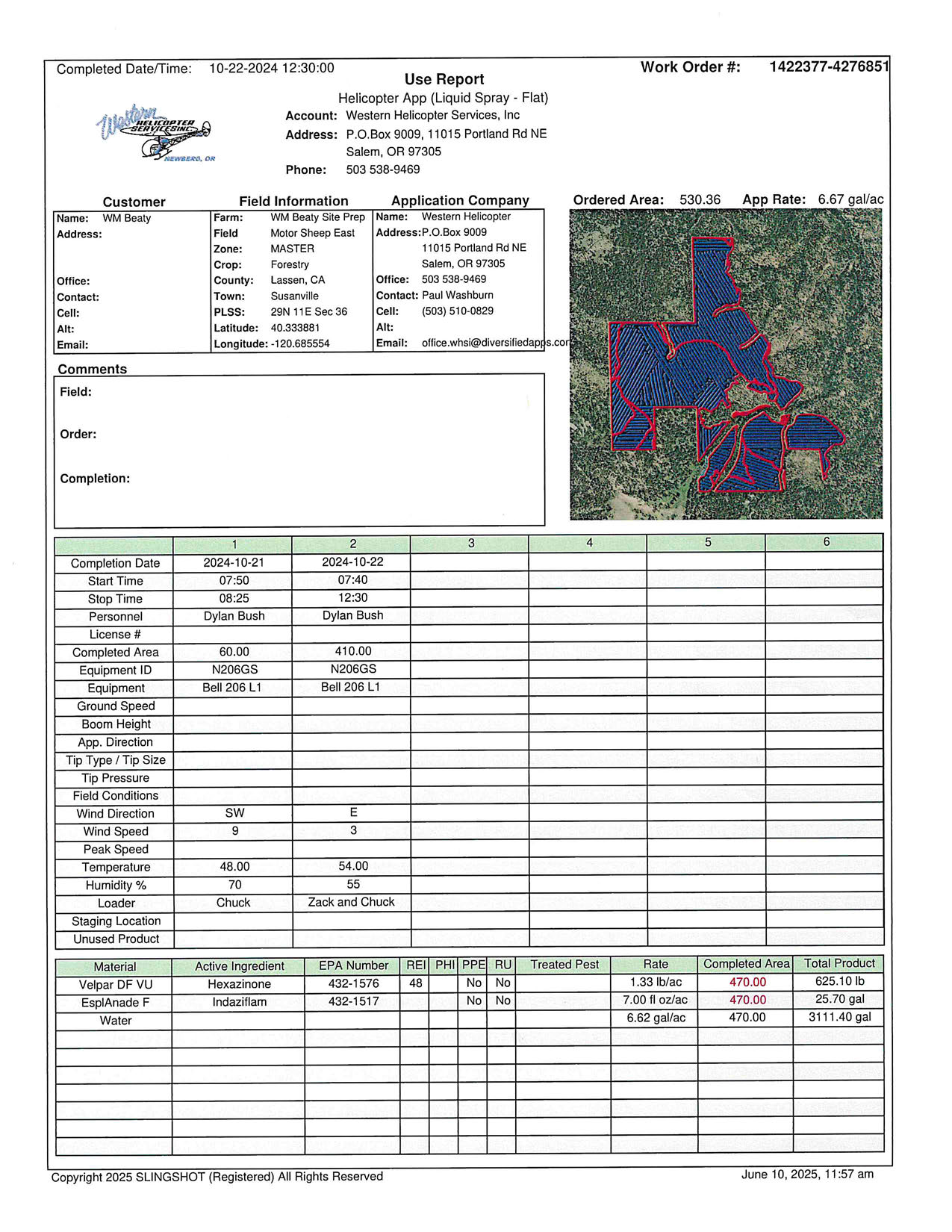
The Motor Sheep Biomass project on privately owned land received CAL FIRE grant funding. Western Helicopter’s completed work order, which names the application area “Motor Sheep East,” records herbicide applications over 470.00 acres. The property is managed by W.M. Beaty & Associates. Western Helicopter Services, part of Helena Agri-Enterprises through Diversified Applications, applied hexazinone and indaziflam on October 21–22, 2024. Shane Compton of W.M. Beaty & Associates is named on the permit.

CWMP reports that the California Department of Pesticide Regulation (DPR), Lassen County Agricultural Commissioner Gary Fensler and the Lahontan Regional Water Quality Control Board were notified about this drainage pathway but took no action to stop or contain the runoff.

CWMP reports that Lahontan’s Assistant Executive Officer Jan Zimmerman (jan.zimmerman@waterboards.ca.gov) and Executive Officer Ben Letton (Ben.Letton@waterboards.ca.gov) both refused to inspect the site after a complaint had been filed, despite the project’s Category 6 enrollment. Category 6 is the highest category under Lahontan’s Timber Waiver and carries expanded water-quality protection, monitoring and reporting requirements for activities posing greater potential threats to water quality.

Company leadership & public oversight

Ryan Hilburn and Shane Compton.

Ryan Hilburn, pictured on the California Board of Forestry and Fire Protection website.

Ryan Hilburn

W.M. Beaty’s current company biography identifies Hilburn as General Manager, responsible for directing forest-management activities for the firm’s clients. It lists his professional forester registration as RPF #2782.

Hilburn also serves on the California Board of Forestry and Fire Protection as a Forest Products Industry Representative. His appointment was announced on December 3, 2024, after the applications documented here. The appointment announcement and Board biography describe his earlier role as Chief Forester. He is also the Board’s co-chair of the Effectiveness Monitoring Committee (EMC).

Photo: California Board of Forestry and Fire Protection.

Shane Compton, pictured on W.M. Beaty & Associates’ staff page.

Shane Compton

W.M. Beaty’s staff page identifies Compton as Reforestation Forester. He is the forester named on the Motor Sheep permit, with listed credentials QAL #139592 and RPF #2903.

Photo: W.M. Beaty & Associates staff page.

What the Board is responsible for

The Board’s statutory responsibilities include setting California’s forest policy, establishing guidance policies for CAL FIRE, adopting Forest Practice Rules and overseeing professional-forester licensing. The Board also developed the California Vegetation Treatment Program, which includes herbicide application among its vegetation-treatment methods.

CAL FIRE administers Forest Health grants and other forestry funding programs. Pesticide-use reporting and enforcement involve DPR and county agricultural commissioners.

The same committee that left the herbicide study unfunded.

Ryan Hilburn now serves as the Board’s co-chair of the Effectiveness Monitoring Committee (EMC). The Board created the EMC to assess whether California’s forestry rules protect public resources. W.M. Beaty’s General Manager therefore also holds a leadership position in the committee that helps select research used to evaluate those safeguards.

This is the same EMC that considered EMC-2022-001, the proposed study of herbicide discharges and water quality after post-fire reforestation. The November 18, 2022 meeting record shows that members discussed the proposal before lunch, but the funding motion after lunch covered EMC-2022-003, EMC-2022-004 and EMC-2022-005, leaving the herbicide-water study out. That decision preceded Hilburn’s December 2024 appointment to the Board.

CWMP sees this overlap between industry management and monitoring leadership as a serious accountability concern: the committee that left the herbicide study unfunded is now co-chaired by the General Manager of a firm involved in the applications CWMP identifies as unreported. How will the Board and EMC ensure independent herbicide monitoring, transparent research decisions and public accountability?

Who CWMP says knew about the missing reports

CWMP reports that Ryan Hilburn, Shane Compton, Western Helicopter Services and the Lassen County Agricultural Department knew the two Plumas applications had not been reported to Plumas County. According to CWMP, they did not bring the missing reports to Plumas officials’ attention or ensure the required reports were filed, even after becoming aware of the omissions. This allegation concerns their knowledge and subsequent actions; the work orders alone do not establish who knew what or when.

Original Western Helicopter work order 1422377-4276851 for WM Beaty: Motor Sheep East, October 21–22, 2024, with 470.00 completed acres and hexazinone and indaziflam listed.

The original application record

Six projects.
4,226.08 application acres.

CWMP reports that Motor Sheep’s hexazinone and indaziflam applications were not reported to the Lassen County Agricultural Commissioner as required by law. CWMP identifies this and five other projects involving W.M. Beaty & Associates, Shane Compton and Western Helicopter Services as unreported applications in Lassen and Plumas counties during 2023 and 2024.

The six work orders record 4,226.08 completed application acres. Three list 2,4-D. CWMP reports an active Plumas County investigation into its two projects and a Lassen County citation for Motor Sheep alone.

All six applications took place in October: two in 2023 and four in 2024. The June 10, 2025 cover emails show Paul Washburn of Western Helicopter Services sending these work orders to the Lassen County Agricultural Department. CWMP reports that the applications had not been reported as required before that handover.

Complete 8-page packet: both cover emails and all six completed work orders.

Working forests and clean water

California should not have to choose between the two.

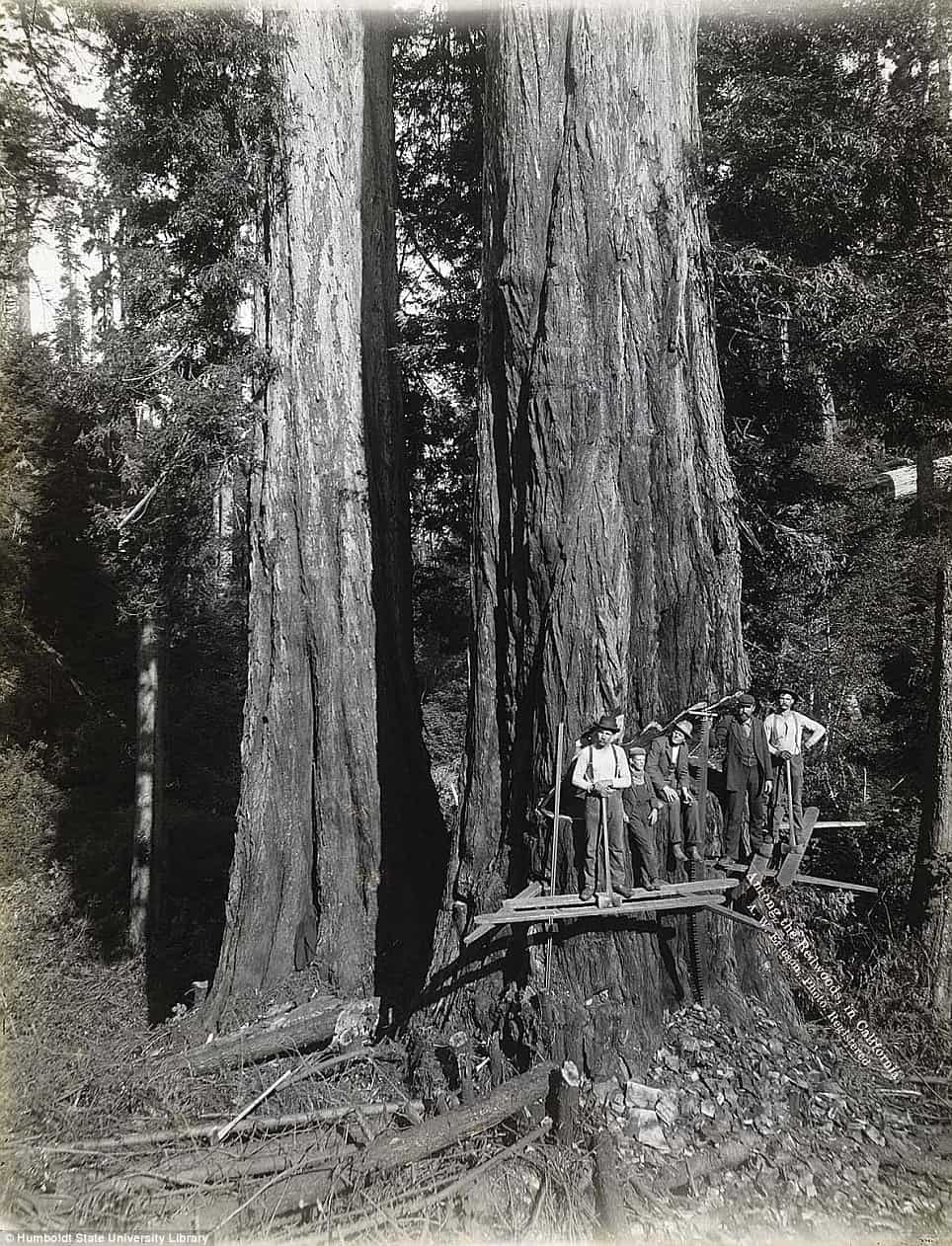
Historic photograph of loggers standing beside enormous redwoods, circa 1915

Logging and forest products have been part of California’s history, economy and rural communities for generations. California Water Monitoring Project is not opposed to forestry, logging, reforestation or responsible vegetation management.

Our concern is specific: when herbicides are used on forestry projects, the public should be able to know whether those chemicals remain within the treatment area or move into runoff, streams, springs and other waters.

Water is one of California’s most precious shared resources. Independent monitoring gives landowners, agencies, communities and families real evidence about what happens after treatment. If the protections are working, the data can show that. If herbicides are moving off site and reaching water, that should be documented and addressed.

Responsible forestry and credible water monitoring can—and should—exist side by side.

Training and public awareness will help communities take part in that work. Starting in Lassen and Plumas, we will teach volunteers how to use application records, follow a sampling plan and publish laboratory evidence. As funding and volunteers grow, we will assist other California counties in building the same monitoring process.

Agency cooperation · Public evidence

Cooperation is welcome.
The monitoring will proceed.

We want to work with county agricultural departments, DPR, the State and Regional Water Boards, the Board of Forestry and Fire Protection, CAL FIRE and the U.S. Forest Service to connect forestry-herbicide applications with what is found in the water.

Based on our experience with agency operations in Lassen and Plumas counties, we do not expect cooperation and will not make our work dependent on it. We will obtain records through public-records requests, conduct independent testing and publish the evidence.

01

Share the application records

County agricultural departments & DPR

Provide timely pesticide use reports, notices of intent and relevant application records so our sampling plans target the chemicals actually used, where they were applied and when.

Our experience has varied sharply: Lassen County has involved a law firm in responding to our requests, and we have encountered denials and delays in obtaining public herbicide records. By contrast, the Plumas County Agricultural Department has been excellent in its records production. We applaud its responsiveness and commitment to public access.

02

Give notice before treatment

BOF · CAL FIRE · U.S. Forest Service · Landowners & applicators

We welcome early notification from logging companies and property owners. Responsible land stewardship includes transparency about chemicals applied within our shared watersheds. A brief email identifying what will be sprayed, where and when is a practical way to demonstrate that commitment and help us plan meaningful monitoring. Treatment maps and assistance with access will help us follow runoff during fall rains and spring snowmelt.

03

Confirm findings and act on the evidence

CAL FIRE · Project operators · Water Boards · DPR · County agricultural departments

If laboratory testing detects herbicides in runoff downstream of a CAL FIRE project or logging operation, we will promptly notify CAL FIRE, the landowner, project operator and applicator, along with the county agricultural department, DPR and the appropriate Water Board. We will provide the laboratory results, documented sample locations and relevant application records, and ask them to investigate the source, assess whether herbicides are leaving the treatment area and take corrective action where warranted. We will file complaints, help investigators reach the sampling sites and publish the findings and responses so residents can follow what happens next.

Once funding is secured and the monitoring program begins, we will contact logging companies, participating property owners, county agricultural departments, DPR, the State and Regional Water Boards, CAL FIRE, the Board of Forestry and Fire Protection and the U.S. Forest Service in writing. We will outline our monitoring plans, explain how we will document and share findings, and request their cooperation with application records, advance notifications and follow-up investigations.

We will publish our outreach letters and their responses on this website so you can see who cooperates, what they commit to and whether they follow through. As cooperation develops, we will update this website with the records shared, assistance provided and actions taken. We will also identify unanswered requests and publish laboratory results, sample locations and subsequent agency responses.

Help coordinate application notifications

BOARD OF FORESTRY · CAL FIRE · PUBLIC MONEY · WATER ACCOUNTABILITY

The policy is statewide. The herbicide water monitoring is not.

The Board of Forestry and Fire Protection sets California’s general forest policy, determines guidance policies for CAL FIRE and adopts the Forest Practice Rules. CAL FIRE administers and enforces those rules and approves, funds or carries out forestry and vegetation-management work.

That makes the monitoring gap a policy problem, not just a project-by-project problem.

“Water quality is protected and maintained”

CAL FIRE · Environmental Protection Program’s stated mission ↗

The herbicide detections were documented years ago. The 2022 proposal submitted to the Board of Forestry described hexazinone in five of six sampling locations during winter 2020–2021, and further detections downstream of regeneration and timber-salvage operations that summer.

Yet the proposed application-linked EMC study did not go ahead. Where is the routine downstream testing that shows whether the herbicides used on these projects stay out of the water? That is the evidence CWMP intends to collect and publish.

Read the 2022 proposal and its monitoring history
01

BOF writes the forestry rulebook

The Board sets the statewide policy and Forest Practice Rules that guide timber operations. It also developed CalVTP, whose treatment methods expressly include herbicide application.
BOF’s policy responsibilities ↗

02

CAL FIRE implements it through projects and CEQA

CAL FIRE says projects it approves, permits, funds or carries out are subject to environmental review, with exemptions for qualifying activities. Review documents and safeguards need field evidence showing whether they work.

03

Public money supports herbicide work

CAL FIRE’s Forest Improvement Program offers up to $2 million per solicitation period and explicitly includes herbicide follow-up among cost-shared activities. Publicly funded treatment should come with publicly available water evidence.
CAL FIRE’s funding and eligible work ↗

04

But where is the project-linked water testing?

Large treatment programs can move forward without routine downstream laboratory testing tied to the herbicides actually used on each project. CWMP believes that is a major accountability gap.

Environmental protection should be demonstrated in the water.

Our work is designed to independently audit the result of this system in the field. We use filed pesticide-use reports and other application evidence to locate treated projects and plan sampling below them. We also investigate missing autumn reports and test for suspected later chemicals, even when an application is absent from the PUR record. The question is straightforward: are the rules, exemptions and project protections actually keeping forestry herbicides out of California's water?

Use the data

Herbicide Tracker

Browse California forestry herbicide application records and use the same public records that help CWMP identify products, active ingredients, dates and treatment locations.

Open Herbicide Tracker

Water & soil concerns

Has there been logging near your property?

Tell us about a nearby project or a concern about your water source or soil. When funding is available, we will arrange testing. If we cannot fund it, we will explain your options and help you arrange testing yourself.

Get testing help

People and resources needed

Help prove the process.

The first volunteers will help demonstrate the process in Lassen and Plumas. Training and public awareness are part of our mission. As funding and volunteers grow, we will help residents in other California counties obtain PURs, write sampling plans, collect and ship samples, publish results and follow up with agencies. Our website and public results map will grow with each participating county.

County sampling volunteers

Help identify accessible runoff locations, document field conditions and collect samples under a defined sampling plan.

Water science & chemistry

Help interpret laboratory results and explain what each sample can and cannot establish.

Fund the testing

Laboratory analyses, sample bottles and shipping, field travel, volunteer training and basic publication costs determine how much can be tested.

Ways to get involved

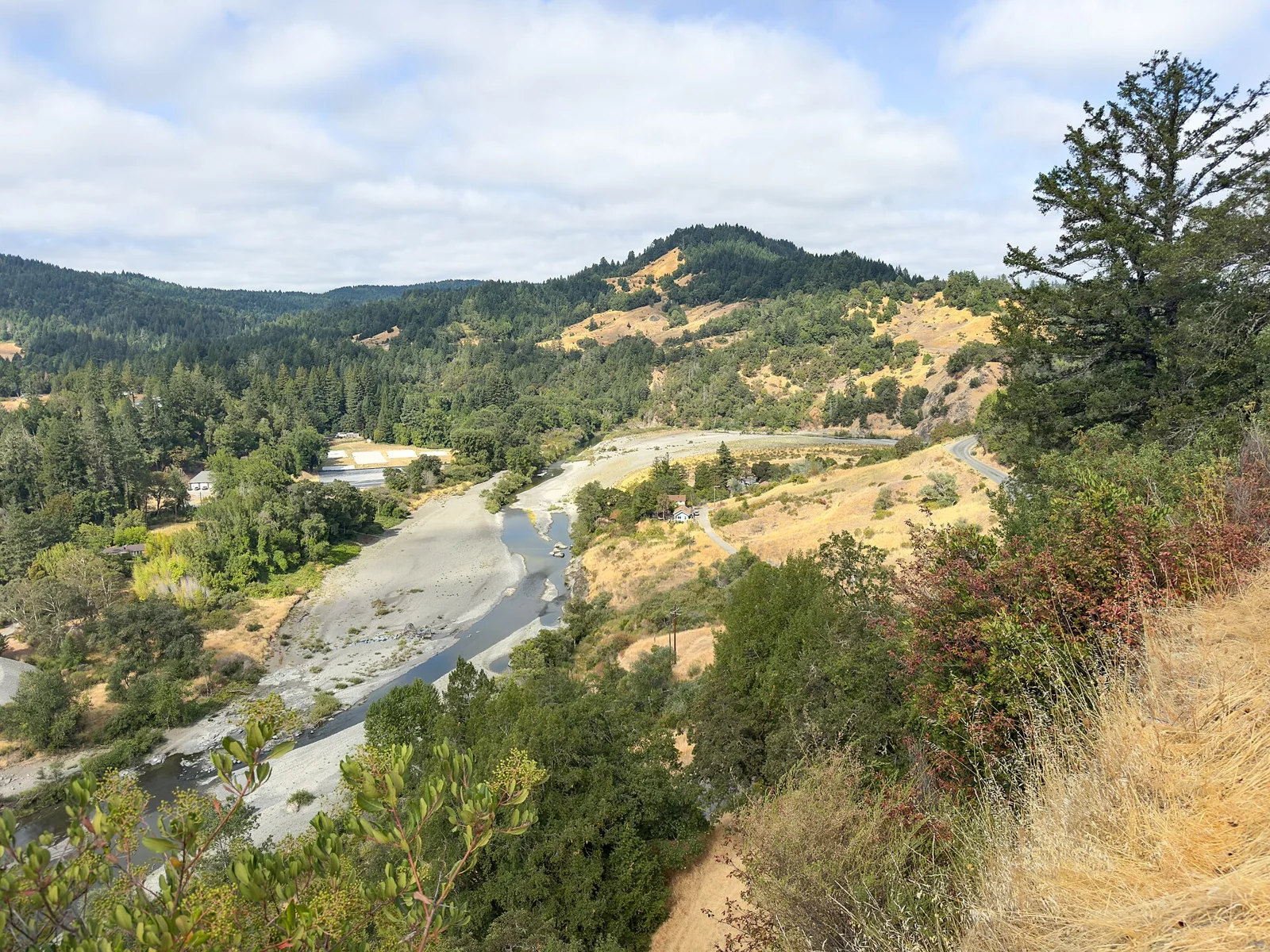
South Fork Eel River viewed from Garberville, California

California Water Monitoring Project

Get the records. Test the runoff. Publish the evidence. Restore accountability for California’s water.

Build the evidence. Train volunteers. Expand the monitoring.

Be part of the work